
How AI Software Can Help Managers Make Better Procurement Decisions
Procurement has never been “just buying.” For managers, it’s a daily balancing act: secure supply, control cost, enforce compliance, and still move fast enough to keep operations running. The problem is that most teams are trying to do all of that with scattered spreadsheets, static reports, and overworked stakeholder reviews, meaning decisions are often based on partial data, gut feel, or last year’s supplier scorecards.
For the send123.com blog audience, busy managers who need practical, results-oriented guidance, this article explains what is AI in procurement, where it delivers measurable value, and how to adopt it without derailing day-to-day purchasing. You’ll also see how how ai software can help managers make better procurement decisions in real workflows, not just demos.
Why procurement decisions are harder than they used to be
Even seasoned managers struggle with procurement today because:
- Spend is fragmented across business units, cards, POs, and marketplaces.
- Supplier risk changes quickly (financial health, lead times, geopolitical exposure, quality drift).
- Contracts are complex, and teams miss obligations, renewals, and leakage.
- Compliance expectations are rising (policy, data security, sustainability, ESG, and audit trails).
- Cycle times matter, and manual review creates bottlenecks.
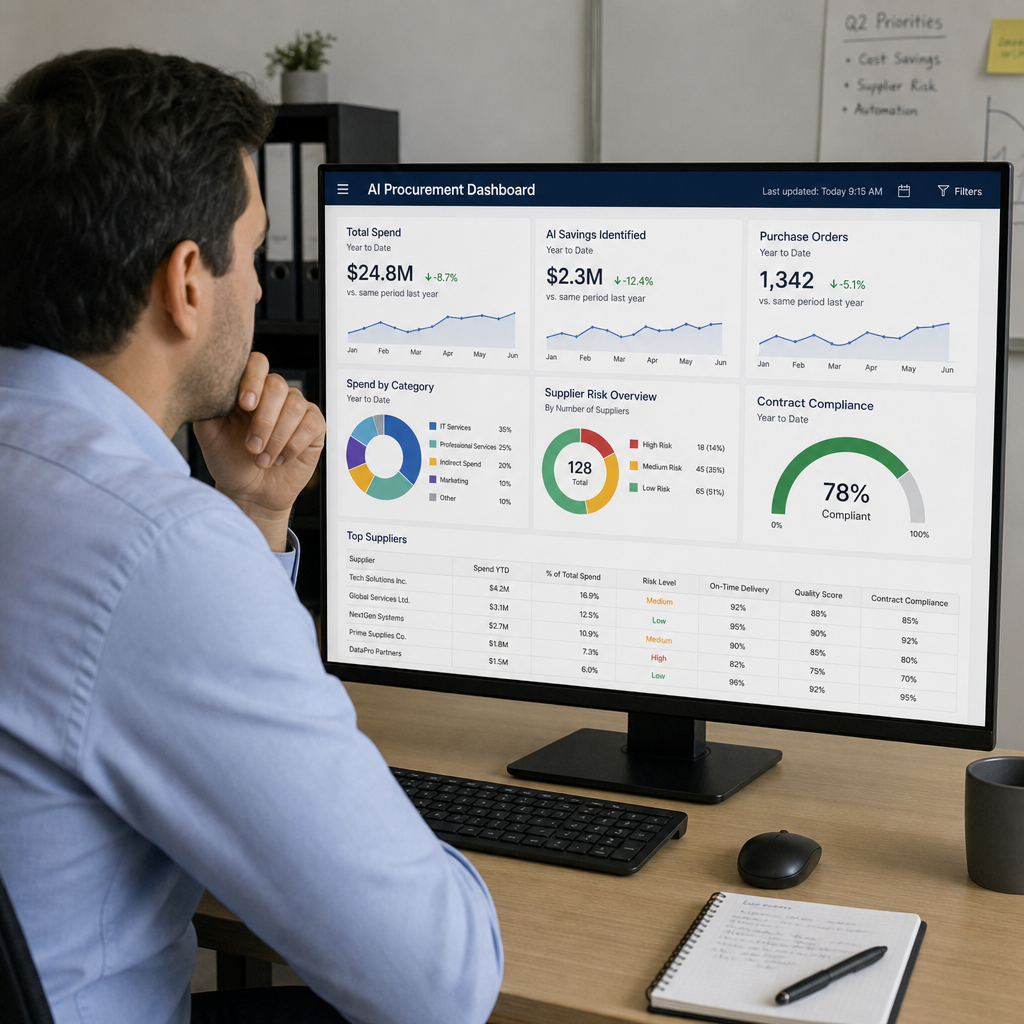
AI doesn’t “replace procurement.” It helps managers make better calls by turning messy data into decision-ready insight, automating routine steps, and flagging risk early, especially when paired with modern procurement decision support systems.
What is AI in procurement (and what it is not)
AI in procurement refers to software that uses machine learning, natural language processing (NLP), and intelligent automation to improve purchasing outcomes, cost, speed, compliance, and resilience.
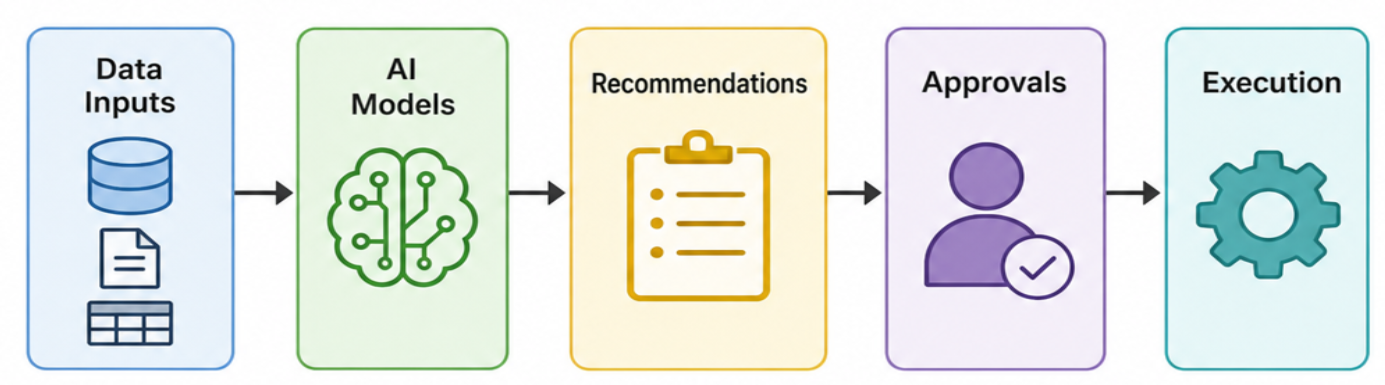
It is not a magic “autobuy” button. The best outcomes come when managers define guardrails (policies, thresholds, preferred suppliers, approval matrices) and let AI handle:
- Data consolidation and classification
- Pattern detection (spend, pricing, performance)
- Recommendations and scenario comparisons
- Automated workflows (routing, matching, exception handling)
Think of an AI procurement software guide as a playbook for where AI adds leverage, especially in high-volume, high-variance decisions.
How AI software helps managers make better procurement decisions: the core use cases
Below are the most impactful, manager-relevant use cases of ai software for procurement decisions, with practical “what changes on Monday morning” examples.
1) AI-driven spend analysis that actually answers “Where can we save?”
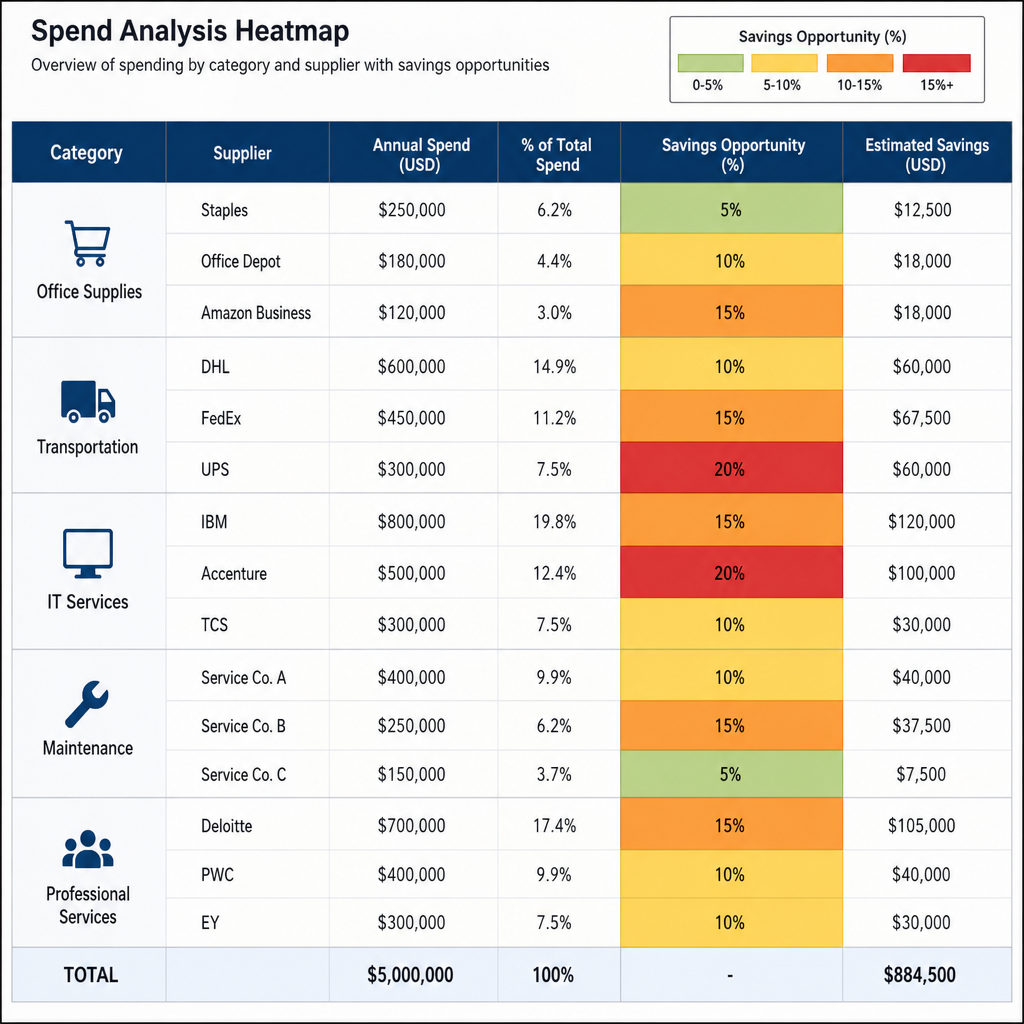
Traditional spend reports often fail because the data is poorly categorized, duplicated, or missing context. AI-driven spend analysis uses pattern recognition to clean, normalize, and classify spend across vendors, subsidiaries, and item descriptions.
With AI, managers can:
- Identify maverick spend and off-contract buying
- Detect price variance for equivalent items
- Surface consolidation opportunities (fewer suppliers, better tiers)
- Compare internal demand patterns vs contracted volumes
This is where procurement analytics software becomes strategic: you don’t just see totals, you see levers.
Actionable tip: Start with your top 3 categories by annual spend and top 20 suppliers. If the AI can’t classify at least ~85–90% of line items automatically, fix data sources before expanding scope.
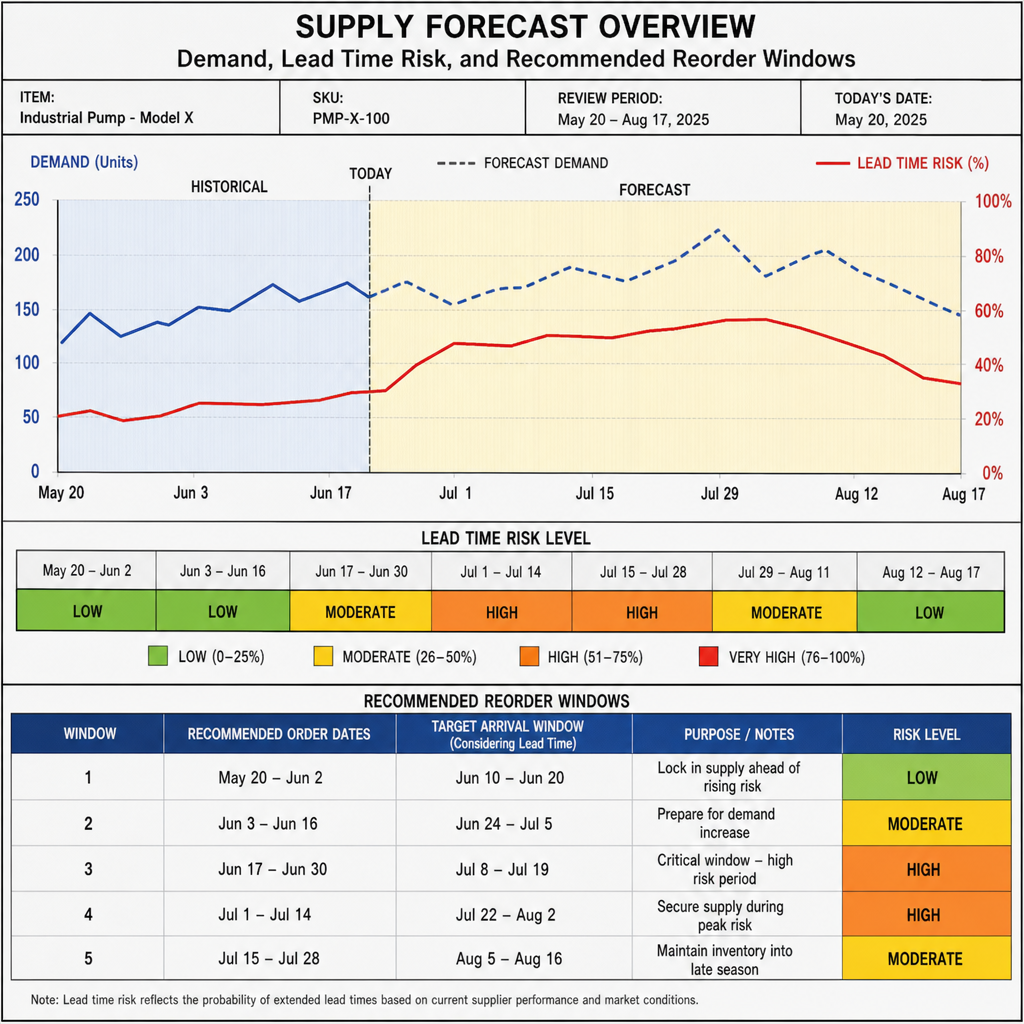
2) Predictive procurement analytics for smarter timing and inventory decisions
Managers frequently face a timing dilemma: buy now at today’s price, or wait and risk shortages and expediting fees. Predictive procurement analytics combines demand signals, lead times, historical volatility, and supplier performance to forecast outcomes.
Practical decisions AI improves:
- When to reorder to avoid expediting
- Which suppliers are likely to slip on lead time next month
- Which SKUs show seasonal spikes
- When to lock pricing vs stay flexible
This is especially valuable in categories with volatile logistics or variable demand. The goal isn’t perfect forecasting, it’s better odds and faster responses.
Actionable tip: Use prediction outputs as a “second opinion” during S&OP meetings. Track forecast accuracy and continuously calibrate.
3) Alternative to manual supplier evaluation (without losing governance)
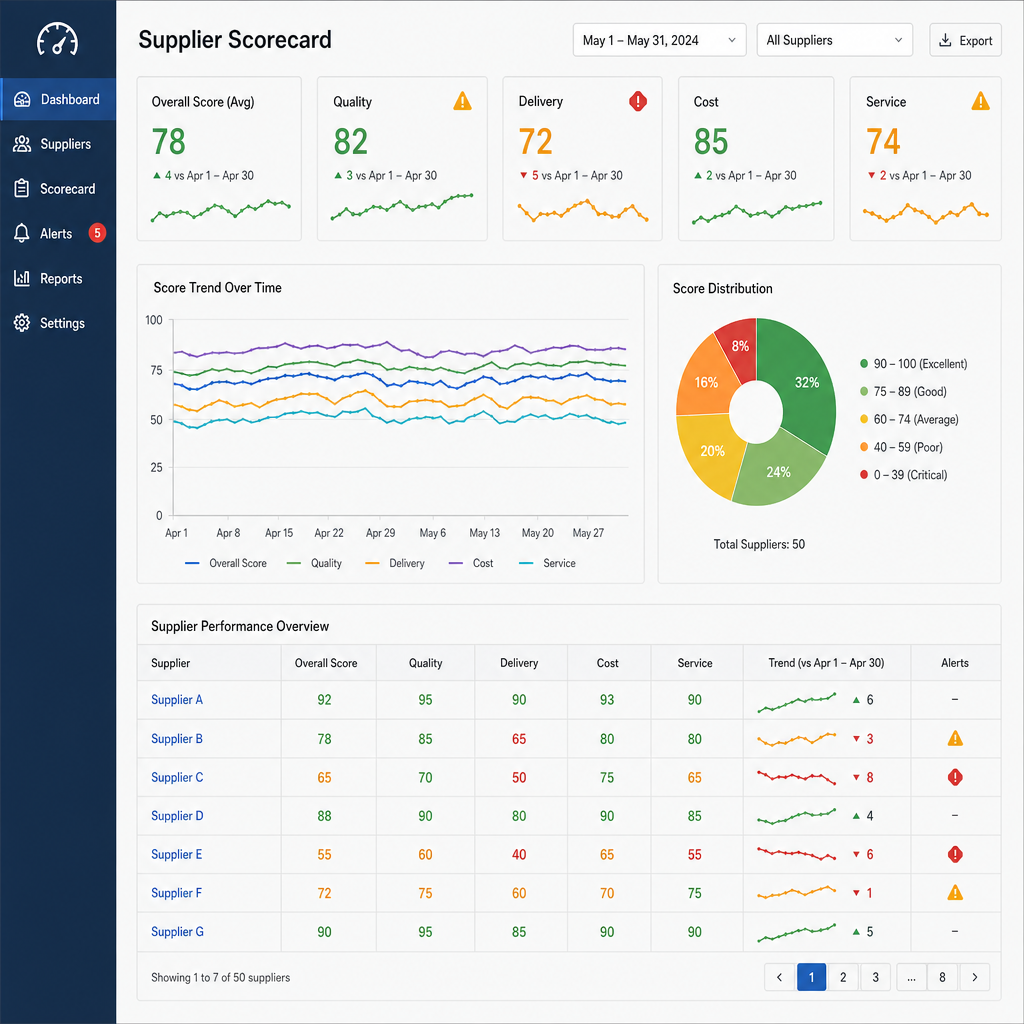
Manual supplier evaluation is slow and inconsistent, different stakeholders weight different factors, and reviews lag behind reality. AI can be an alternative to manual supplier evaluation by standardizing scorecards and updating them continuously.
Where AI helps:
- Auto-collect performance signals (OTIF, quality rejects, responsiveness)
- Normalize scores across regions and plants
- Explain drivers behind a score change (late shipments, defect spikes)
- Recommend next steps (audit, corrective action, backup source)
This becomes more powerful with real-time supplier performance monitoring, which can alert managers before issues become outages.
Actionable tip: Define “hard stop” thresholds (e.g., quality failures > X, on-time delivery < Y). Let AI flag exceptions, but keep final approval with managers.
4) Supplier risk scoring tools that spot trouble early
Supplier risk isn’t just about bankruptcy. It’s also capacity constraints, cyber posture, concentration risk, compliance gaps, and geographic exposure. Supplier risk scoring tools use structured and unstructured data (performance records, incident reports, news signals, payment behavior, etc.) to rank suppliers by risk and impact.
Managers can use AI to:
- Prioritize audits and business continuity planning
- Identify single points of failure in the supply base
- Build dual-sourcing strategies with quantifiable trade-offs
- Detect early indicators of degradation (late delivery trends, dispute frequency)
This reduces firefighting and supports resilient sourcing decisions.
Actionable tip: Build a “risk x criticality” matrix. AI scores are most valuable when paired with how critical the supplier is to operations.
5) Contract analytics using AI to prevent leakage and missed obligations
Contracts are full of value, rebates, volume tiers, service levels, auto-renewal clauses, but it’s hard for humans to track at scale. Contract analytics using AI extracts key terms, obligations, and renewal dates, then matches them against actual purchasing and performance.
Managers benefit when AI can:
- Detect purchases that should be discounted but aren’t
- Identify off-contract buying that violates policy
- Flag risky clauses and non-standard terms
- Automate renewal reminders and renegotiation triggers
This is one of the fastest ways to improve procurement maturity because it turns contracts into operational controls, not PDFs in a folder.
Actionable tip: Start with your highest-value contracts and those with renewals in the next 90–180 days. Measure leakage before and after.
6) Purchase order automation benefits: faster cycle times with fewer errors
Many procurement delays come from repetitive admin tasks: creating POs, routing approvals, matching invoices, and chasing exceptions. AI and intelligent automation deliver tangible purchase order automation benefits:
- Faster requisition-to-PO conversion
- Automatic GL coding suggestions
- Smart approvals based on risk/category/amount
- Better 3-way match accuracy (PO, receipt, invoice)
- Fewer duplicate orders and wrong supplier selections
This matters for managers because cycle time is a competitive advantage, and automation frees procurement staff for higher-value work like negotiations and supplier development.
Actionable tip: Don’t automate a broken workflow. Map your process, remove unnecessary approvals, then automate.
7) Procurement fraud detection AI for compliance and audit readiness
Fraud and misuse can hide in plain sight, especially in high-volume purchasing. Procurement fraud detection AI looks for anomalies and suspicious patterns, such as:
- Split purchases to avoid approval thresholds
- Repeated “rush” justifications
- Unusual vendor-bank changes
- Duplicate invoices with slight variations
- Overbilling patterns that deviate from norms
For managers, the win is not just fraud prevention, it’s stronger governance with less manual policing.
Actionable tip: Align detection rules with your internal audit team. Treat alerts as “investigate,” not “accuse,” and track false positives to refine.
AI procurement vs traditional sourcing: what changes in decision-making?
In AI procurement vs traditional sourcing, the biggest shift is from periodic, manual review to continuous, data-driven decision support.
Traditional sourcing often looks like:
- Quarterly spend reviews
- Static supplier scorecards
- Manual RFP comparisons in spreadsheets
- Reactive risk management (after disruption)
- Contract knowledge trapped in legal/procurement inboxes
AI-enabled procurement decision-making looks like:
- Near-real-time category insights
- Automated classification and savings signals
- Supplier recommendations with explainable drivers
- Early risk alerts and scenario planning
- Contract terms connected to actual buying behavior
Managers still decide. AI simply improves the quality and speed of the information they decide with.
Best AI tools for procurement: what to look for (without chasing hype)
You’ll see many vendors claiming to be the best AI tools for procurement, but capabilities vary widely. Use this checklist to evaluate ai procurement tools pragmatically.
Must-have capabilities for managers
- Data ingestion from ERP, P2P, AP, contracts, supplier systems
- Strong spend classification and supplier normalization
- Explainable recommendations (not a black box)
- Workflow integration (approvals, PO creation, ticketing)
- Audit logs, controls, and role-based access
High-impact specialized modules
- Predictive procurement analytics for demand/lead-time risk
- Supplier risk scoring tools with configurable weighting
- Contract analytics using AI with clause extraction and obligation tracking
- Procurement fraud detection AI with anomaly detection and case management
Red flags
- “AI” that is just dashboards with manual tagging
- No clear way to validate model outputs
- Weak master data strategy or no integration plan
- Vendor cannot demonstrate measurable outcomes in your category
Actionable tip: Ask for a proof-of-value based on your data (even a limited sample). Require the vendor to show classification accuracy, time-to-insight, and measurable savings drivers.
Procurement decision support systems: how to design decisions, not just buy software
A common mistake is buying a platform and hoping decisions improve automatically. Instead, treat AI as a layer in your procurement decision support systems.
Build decision “moments” into the workflow
Identify where managers routinely decide:
- Preferred supplier vs new supplier
- Single source vs dual source
- Buy now vs later
- Approve exception vs enforce policy
- Renew contract vs renegotiate vs rebid
Then configure AI to present:
- Options (2–4 realistic alternatives)
- Trade-offs (cost, risk, lead time, quality)
- Recommended action with rationale
- Required approvals based on risk
This structure is how reducing procurement costs with AI becomes repeatable, not a one-time savings hunt.
How to implement AI in procurement: a practical rollout plan for managers
Managers need adoption that doesn’t break operations. Here’s a phased approach to how to implement AI in procurement that works in most organizations.
Phase 1: Get the data foundation right (2–8 weeks)
Focus on:
- Supplier master cleanup (names, duplicates, parent-child)
- Spend taxonomy definition (category structure)
- Contract repository centralization (even if imperfect)
- Integration scope (ERP/P2P/AP first)
Deliverable: A baseline spend view and supplier list that managers trust.
Phase 2: Launch one high-value use case (4–12 weeks)
Pick one:
- AI-driven spend analysis in a top category
- Contract analytics using AI for renewals/leakage
- Supplier risk scoring tools for critical suppliers
- PO automation in a single business unit
Deliverable: A measurable KPI improvement (cycle time, compliance, savings, risk reduction).
Phase 3: Expand + embed into governance (ongoing)
- Add categories and supplier segments
- Create playbooks for common decisions
- Train approvers and stakeholders
- Build reporting cadence (monthly “AI insight review”)
Deliverable: AI outputs become part of standard operating rhythm, not a side dashboard.
Manager playbook: how to use AI day-to-day (without losing control)
Here’s how managers can operationalize AI insights safely and effectively.
Use AI recommendations as “bounded autonomy”
Set guardrails:
- Spend thresholds for auto-approval
- Approved supplier lists by category
- Mandatory fields for exceptions
- Risk thresholds for escalations
Turn AI insights into weekly actions
Create a recurring checklist:
- Review top 10 savings opportunities flagged by AI-driven spend analysis
- Check risk alerts from real-time supplier performance monitoring
- Validate predicted delays from predictive procurement analytics
- Review contract renewals and leakage flags
- Triage anomalies from procurement fraud detection AI
Keep humans accountable for the “why”
AI can say “Supplier B is higher risk.” Managers must decide:
- Is the item critical enough to switch?
- Do we need dual sourcing?
- Can we mitigate with SLAs, inventory buffers, or audits?
This is how how ai software can help managers make better procurement decisions becomes a management system, not just software.
Common pitfalls (and how to avoid them)
Pitfall 1
- Chasing automation before fixing the process: If approvals are unclear and categories are messy, automation will scale confusion.
- Fix: Simplify approvals, standardize categories, then automate.
Pitfall 2
- Treating AI as a replacement for stakeholder alignment: AI can recommend, but it can’t resolve competing priorities across finance, operations, and quality.
- Fix: Define decision criteria and weighting upfront.
Pitfall 3
- Ignoring change management: If users don’t trust the recommendations, they won’t use them.
- Fix: Start with explainable outputs and quick wins. Publish before/after metrics.
Pitfall 4
- Overlooking security and governance: Procurement data is sensitive (pricing, terms, supplier info).
- Fix: Ensure role-based access, audit logs, and clear data retention policies.
The takeaway
AI is most valuable in procurement when it improves the quality and speed of managerial decisions, not when it simply adds another dashboard. With the right procurement analytics software, teams can scale AI-driven spend analysis, apply predictive procurement analytics to timing and supply risk, use supplier risk scoring tools for resilience, strengthen compliance with procurement fraud detection AI, and capture value through contract analytics using AI, all while realizing real purchase order automation benefits.
For procurement leaders and managers reading the send123.com blog, the best next step is simple: choose one decision you make repeatedly (supplier selection, renewals, approvals, or risk reviews), pilot AI with clear guardrails, and measure outcomes. That’s the fastest path to better decisions, and sustained savings.
Keywords: Procurement Analytics Software, AI Procurement Tools, AI Software for Procurement Decisions
Written by Jeff Golfman and refined with AI assistance.